Speech therapy helps children and adults improve their communication, speech, language, voice, and social communication skills. It provides personalized support to overcome communication challenges and express themselves with greater clarity and confidence.
Through engaging, evidence-based techniques, speech therapy builds practical communication skills step by step. With the right guidance and encouragement, individuals can develop stronger language abilities, boost confidence, and communicate more effectively in everyday life.

Speech therapy can help individuals with:

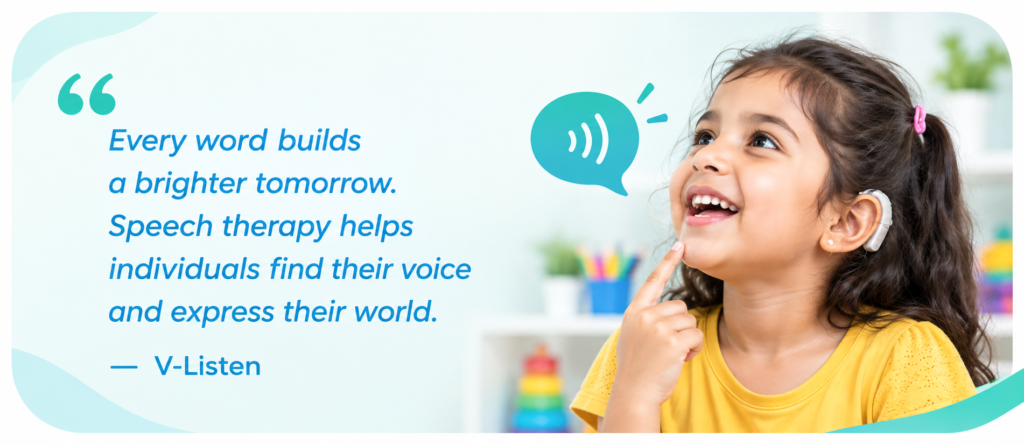

Speech therapy helps children and adults improve their speech, language, communication, and related skills. It may address difficulties with pronunciation, understanding language, expressing thoughts, fluency, or voice. A speech-language therapist assesses the person’s needs and develops an appropriate therapy plan. The goal is to support clearer communication and help individuals participate more confidently in everyday situations.
Speech therapy may benefit children and adults who have difficulty pronouncing words, expressing themselves, understanding language, or communicating clearly. It can also help people who stammer, experience voice difficulties, or develop communication problems after certain medical conditions. If you notice persistent communication difficulties, a professional assessment can help identify the concerns and determine whether speech therapy may be helpful.


A child can begin speech therapy when communication concerns are identified, depending on their individual needs. There is no single age at which every child should start. If your child has difficulty speaking, understanding instructions, using words, or communicating for their age, consult a qualified speech-language therapist. Early assessment can help identify concerns and guide appropriate support for development.
The time needed to see progress in speech therapy varies from person to person. It depends on the type of communication difficulty, its severity, the individual’s age, therapy frequency, and regular practice at home. Some people may notice changes sooner, while others need longer support. A speech-language therapist can discuss realistic goals and review progress throughout the therapy process.


The frequency of speech therapy sessions depends on the individual’s communication needs, therapy goals, age, and progress. Some people may benefit from weekly sessions, while others may need a different schedule recommended by their therapist. Regular attendance and practising recommended activities at home can support progress. Your speech-language therapist will suggest a suitable plan based on the initial assessment.
Yes, speech therapy can help children who have difficulty pronouncing sounds, forming words, or speaking clearly. A speech-language therapist assesses the child’s speech development and identifies areas that may need support. Therapy may include age-appropriate activities and exercises to improve sound production and communication skills. Early assessment can help parents understand their child’s needs and explore suitable intervention options.


V-Listen Speech & Hearing Clinic is dedicated to improving the quality of life of people facing speech and hearing challenges.
© 2026 V-Listen Gurgaon
